

The 41st International Scientific & Expert Meeting of Gas Professionals, with an exhibition of gas equipment and technology, was successfully held at the Congress Center of the Grand Hotel Adriatic in Opatija from 6 to 8 May 2026 organized by the Croatian Gas Association (CGA), member of the International Gas Union (IGU) and the Croatian Gas Centre Ltd.
The meeting was held under the high auspices of the Ministry of Economy and the Croatian Standards Institute. The meeting was also supported by the main partners Prvo plinarsko društvo Ltd. and INA-Industrija nafte d. d., the gold sponsor Međimurje-plin Ltd., the sponsors Plinacro Ltd., LNG Croatia LLC, Siemens Energy Ltd., Monter-strojarske montaže d. d., HEP d. d., MET Croatia Energy Trade Ltd., Gradska plinara Zagreb Ltd., Gradska plinara Bjelovar Ltd., and the co-organizers Podzemno skladište plina Ltd., EVN Croatia plin Ltd., Gradska plinara Zagreb Opskrba Ltd., E.ON Distribucija plina Ltd., Termoplin d. d. Varaždin, Specijalna oprema Lučko Ltd. and ATO Inženjering Ltd.
Over three days, about 600 participants attended the meeting. This year, the well-attended event gathered numerous gas and energy experts, including scientists from Croatian and European universities, managers of energy companies, representatives from energy organizations in the gas sector, representatives of large industrial gas consumers, as well as manufacturers and distributors of gas equipment both domestically and abroad. Eight roundtables and five engaging interactive panel discussions were held. A series of scientific and professional papers was presented. The meeting brought together representatives of 200 gas and energy companies, educational institutions and institutes from 21 countries, 35 exhibitors from Croatia and abroad presented their product and service portfolios within the indoor exhibition units.
The interesting conference program covered nine current thematic units concerning the most relevant topics in the natural gas industry and energy transition, featuring interactive panel discussions, roundtables, and a poster session.
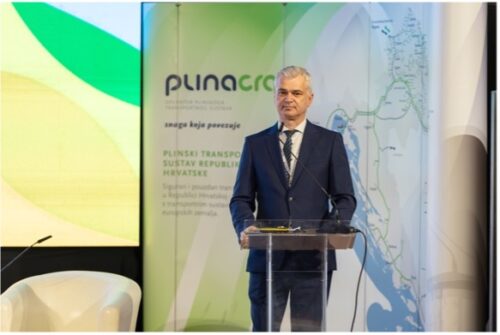 At the opening of the meeting, the President of the Croatian Gas Association, Assoc. Prof. Dalibor Pudić, PhD., greeted the attendees warmly. He pointed out that we are in a time of new challenges because the gas energy markets have shown exceptional sensitivity and interconnectedness to the emerging conflicts in the Middle East. The energy sector needs to recognize and understand new crises at the global level and respond as best as possible to changes. For this reason, the diversification of supply sources, the development of gas pipeline infrastructure and storage capacities, and the improvement of regional and international cooperation are crucial for the stability of the market and the economy. Natural gas continues to have an indispensable place and is a guarantor of the flexibility and reliability of the energy system. He expressed his belief that the international scientific and expert meeting in Opatija will be the right place for exchanging ideas and new views on energy in the future and a platform for dialogue with the aim of sustainable development and energy transition.
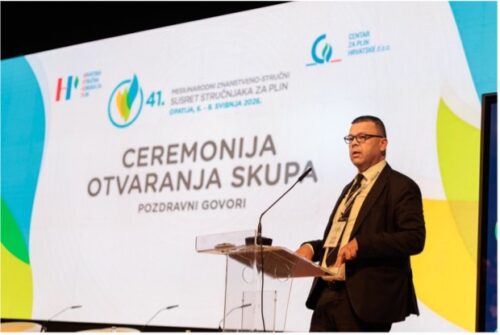 Vedran Špehar, envoy of the Prime Minister of the Republic of Croatia and State Secretary at the Ministry of the Economy of the Republic of Croatia, said that in the time of energy transition, we still cannot do without oil and gas. For the orientation towards renewable energy sources and electrification, the Republic of Croatia has around two billion euros available from European funds for investments in the current period, with the aim of security of supply, sustainability of the energy system and affordability of energy for consumers. He believes that in the coming period, additional efforts should be made in the development of the network and renewable sources.
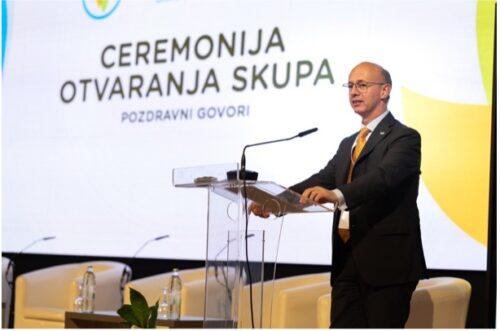 Andrea Stegher, President of the International Gas Union (IGU), noted that gas supplies a quarter of global energy needs, and gas goes beyond mere energy production, as many still wrongly assume. The gas industry is indeed important in many ways: it serves the needs of today’s consumers and makes energy available for future generations. He highlighted the Republic of Croatia as a success story that combines many different parts of the gas value chain, with domestic production, infrastructure development and a regional perspective, perfectly illustrating a long-term vision built on reliable gas relations. Global energy needs demand investment, and decarbonization demands urgency. Climate responsibility requires action, and innovation requires political support. Any sustainable future will be powered by many forms of energy, but gas will remain a central part of any energy mix for decades to come.
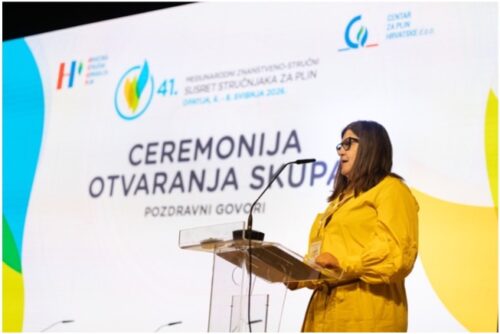 Snježana Đurišić, Director of the Spatial Planning Directorate of the Ministry of Physical Planning, Construction and State Property of the Republic of Croatia, pointed out that three pillars are the foundation of any energy sector: stability of supply, affordability and sustainability of the energy system. She noted the importance of the gas sector as a bridge to new, cleaner technologies. She believes that the expansion of the capacity of the LNG terminal on the island of Krk, the modernization and strengthening of the gas network capacity and regional connectivity, are confirmation of the ambition of the Republic of Croatia to be a reliable partner and an important energy hub in this part of Europe. Ministry of Physical Planning, Construction and State Property of the Republic of Croatia, through a spatial planning system and clear, predictable procedures, creates the prerequisites for the implementation of strategic infrastructure projects. In this context, the energy transition is not only a technical but also a spatial and regional issue.
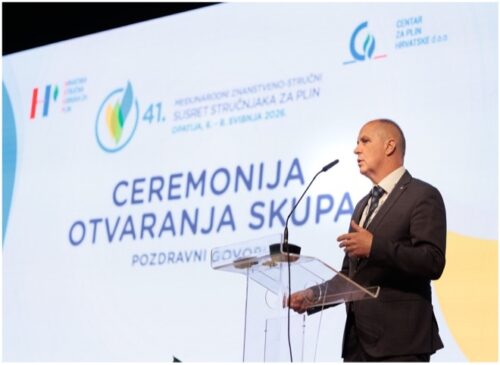 Assist. Prof. Nikola Vištica, PhD., President of the Management Board of the Croatian Energy Regulatory Agency (HERA), highlighted three important items that are important in the gas economy from producers to end customers: tariffing and methodologies, prices and the Gas Market Act that is currently being drafted. HERA has improved the methodology for determining gas distribution tariffs, and there are clear plans for determining tariffs in the next regulatory period. Last year, tariffs were adopted for the transmission system operator and the LNG Terminal operator, and tariffs will be determined for all 27 distribution system operators and the storage system operator by the end of the year. He also announced the adoption of a new Gas Market Act this year, which will position low-carbon gases, biomethane and hydrogen.
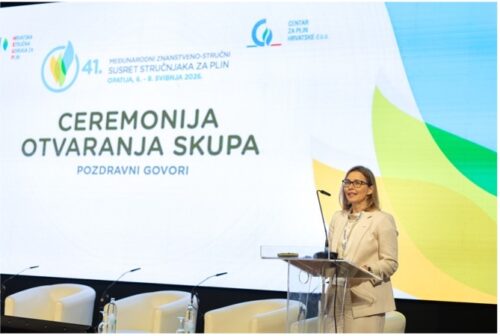 Zsuzsanna Ortutay, President of the Management Board of INA-Industrija nafte d. d., emphasized the importance of the company’s investments in a number of gas exploration and production projects in the Republic of Croatia, as well as the production of green hydrogen and biomethane. She reviewed the past ten years in oil and gas exploration and production, with investments of almost 500 million euros. She confirmed the commercial discovery on the ‘Sava 07’ exploration block. In the context of geopolitical tensions and market instability, the company continues to position gas as a strategic backbone of its business with large investments. In this way, domestic production is strengthened and we reduce exposure to external shocks. She announced new exploration activities in the northern Adriatic and the revitalization of new exploration blocks on land.
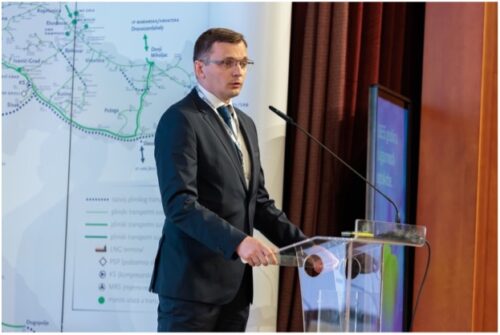 Zvonimir Šibalić, member of the board of Prvo plinarsko društvo Ltd., referred to the increasingly frequent crises caused by geopolitical relations from which it is necessary to draw lessons and recognize them as opportunities that should be used. They need to be prepared for, action plans developed and timely responses made.
Dalibor Mikulić, MSc., member of the board of Plinacro Ltd., referred to the 25 years of existence and operation of the transport system operator Plinacro d. o. o. In the past, 2,600 km of gas pipelines have been built, covering 95% of the territory of the Republic of Croatia, and are a guarantee of secure supply to citizens and the economy and energy stability. Strengthening the capacity of the gas infrastructure, in the context of supplying the regional market, is being carried out through an intensive investment drive worth 533 million euros, which is provided from EU grants from the National Recovery and Resilience Plan (NRRP) for the project “Strengthening Gas Infrastructure”.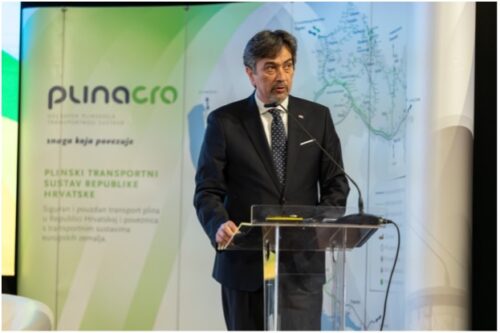 He highlighted the activities to increase the capacity of the transport system and the connection with the UPP terminal on the island of Krk, which increased the possibility of transporting gas to the interior of Croatia and the regional market. He announced future activities regarding the construction of the southern connection to Bosnia and Herzegovina. Plinacro Ltd. is strategically and technologically preparing for the future, which includes the reception and transport of hydrogen, biomethane and other decarbonized gases.
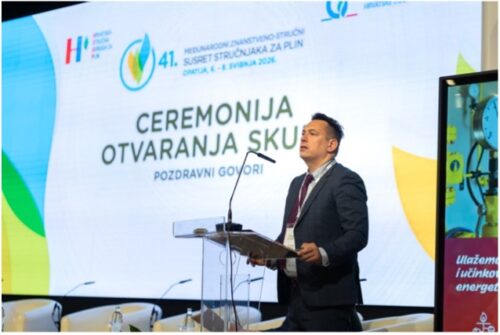 Boris Miljavac, President of the Management Board of Siemens Energy Ltd., noted that the meeting in Opatija is taking place at a time of significant geopolitical events. He emphasized the development of hydrogen technologies and the joint project with INA-Industrija nafte d. d. and Končar in the construction of a facility for the production, storage and distribution of green hydrogen in the Rijeka refinery. The mentioned project represents an exemplary example of decarbonization of the industrial process and can be the basis for the development of the domestic economy in terms of hydrogen placement. In addition, Siemens Energy Ltd. at the beginning of this year, launched a strong investment, together with Končar, by opening a new transformer tank factory.
In the introductory part of the conference, the invited lecture was delivered by Assoc. Prof. Darko Pavlović, PhD., from Plinacro Ltd., who presented global trends in the natural gas market, which in recent years have been strongly shaped by geopolitical disruptions, increased volatility in gas and electricity prices, and the renewed positioning of security of supply at the core of European energy policy. Within this broader European context, the Republic of Croatia has, over the past decade, gradually shifted from a position of structural vulnerability toward the role of a significant gas transit hub, not only for the surrounding region but also for the wider Southeast European region. Today, the Croatian gas system stands at the intersection of global market developments, European security priorities, and energy transition objectives. Experience gained during 25 years of development of Plinacro Ltd. indicates that the future resilience of the system will depend on the ability to achieve a balanced integration of security of supply, market integration, and long-term sustainable infrastructure decisions in a period marked by heightened geopolitical and market uncertainty. Marin Zovko, from INA-Industrija nafte d.d., delivered a presentation on gas exploration and production projects and on the development of gas infrastructure. He presented capital investments in the company’s gas portfolio and gas production in 2025, which currently satisfies 20% of domestic demand. The company expects further development of onshore and offshore production in the Adriatic through additional investments, thereby strengthening the energy future of the Republic of Croatia. Marina Piškorjanac, from Prvo plinarsko društvo Ltd., presented the existing supply routes for Hungary, Slovenia, Serbia, Bosnia and Herzegovina and Ukraine, as markets with significant future gas needs. In the context of the expansion of the LNG terminal capacity on the island of Krk, she presented an analysis of alternative supply routes for each of the aforementioned countries. The analysis demonstrated that the available volumes from the island of Krk LNG terminal represent one of the most competitive supply options, particularly from the perspective of transportation costs.
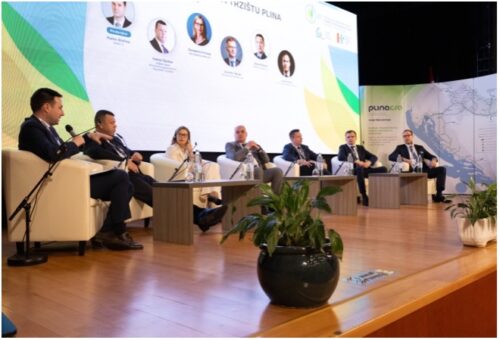 Following the above presentations, a panel discussion entitled Global Trends in the Gas Market was held. The panel was moderated by Marko Biočina, and participants included Vedran Špehar from the Ministry of Economy of the Republic of Croatia, Zsuzsanna Ortutay from INA-Industrija nafte d.d., Zvonimir Šibalić from Prvo plinarsko društvo Ltd., Boris Miljavac from Siemens Energy Ltd., Prof. Vladislav Brkić, PhD. from the Faculty of Mining, Geology and Petroleum Engineering, University of Zagreb and Valter Uravić from MET Croatia Energy Trade Ltd. The panelists pointed out that the economy is already feeling the rise in gas prices due to the crisis in the Middle East, and in the fall, after October 1, the price could rise for households based on the current situation. The wholesale gas market remains stable for the time being; however, future pricing will largely depend on the continuation of the crisis and on the duration of any potential blockage of the strategically important Strait of Hormuz, through which approximately 20% of global LNG production is transported. Since LNG has become a globally traded commodity, Europe will increasingly have to compete on price with other major markets. Nevertheless, it was noted that Europe entered the latest crisis and disruptions on the global market (triggered by the outbreak of conflict in the Middle East) in a significantly stronger position than during the 2022 crisis (following the outbreak of war in Ukraine), due to improved infrastructure and diversified supply routes. By reducing dependence on Russian gas, the EU has turned largely toward LNG supplies. The LNG terminal on the island of Krk represents the most cost-effective supply option for the regional market, including the significant Ukrainian market, and this opportunity should not be missed. In the Republic of Croatia, planned growth in gas production is expected. Gas exploration activities will continue, as domestic production remains the safest and most cost-effective source of supply. In the future, the new gas storage facility in Grubišno Polje is expected to have a positive impact, while security of supply should not be called into question.
Danijel Golja, from Energy Institute Hrvoje Požar emphasized in his presentation the role of natural gas in the Republic of Croatia, presenting the development of gas infrastructure, trends in gas production and consumption, and the role of natural gas within the energy mix and security of energy supply, with a perspective on future developments. The analysis of production and consumption trends included an overview of domestic production and available capacities, as well as sectoral consumption distribution (industry, transport, households, etc.). The need for regulation and balancing energy arises from the variability of production and consumption in real time. The wider deployment of renewable energy sources has resulted in increased requirements for balancing reserves and energy storage. Nenad Švarc, MSc., from HEP Proizvodnja Ltd. highlighted the requirements and achievements related to the provision of frequency ancillary services, i.e. balancing services within the power system in the Republic of Croatia. He analyzed the possibilities for synergistic balancing between energy systems, thereby increasing energy efficiency and reducing emissions.
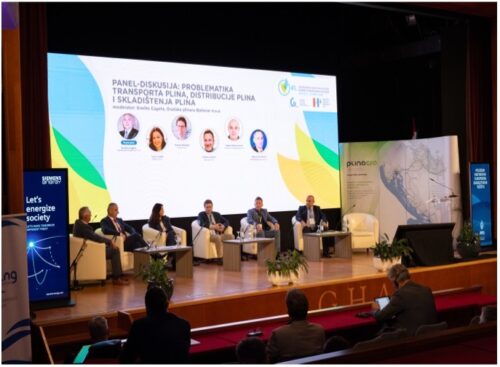
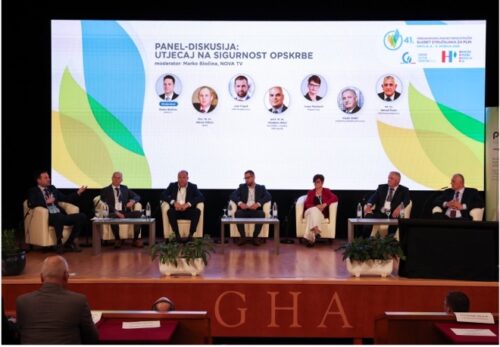 Following the presentations, an engaging panel discussion entitled Impact on Security of Supply was held. The panel was moderated by Marko Biočina, with participation: Assist. Prof. Nikola Vištica, PhD. from the Croatian Energy Regulatory Agency, Ivan Fugaš from LNG Croatia LLC, Ivana Marković from Plinacro Ltd., Vlado Vlašić from Podzemno skladište plina Ltd., Nenad Švarc, MSc. from HEP Proizvodnja Ltd. and Edis Baković from BH-Gas. The panelists emphasized that the regulated gas price for households has proven beneficial during the current energy crisis and, together with Government subsidies, has enabled this category of consumers to pay affordable gas prices. European gas storage facilities are significantly depleted after winter, including the Croatian storage facility in Okoli, and future gas price developments on the market remain uncertain. By the end of this year, gas production from the Grubišno Polje field will cease, and the site will be converted into a new gas storage facility. This year, the Croatian Energy Regulatory Agency (HERA) is expected to determine tariffs for gas distribution and storage services, after which the development of a methodologies for gas transport and LNG will follow. The construction of new gas pipelines is progressing in accordance with planned schedules, and upon completion these pipelines will enable the LNG terminal on the island of Krk to operate at full capacity, thereby allowing significantly larger volumes of gas to be transported to neighboring countries. The conflicts in the Middle East and the blockage of the Strait of Hormuz have not disrupted the operation of the LNG terminal on the island of Krk, since the terminal has not received LNG from that supply route since the end of 2023, nor are there any announcements indicating such deliveries. The launch of activities related to the realization of the Southern Gas Interconnection project, which will connect the gas transmission systems of the Republic of Croatia and Bosnia and Herzegovina, was also announced. This project is expected to improve the economic viability of the gas pipeline network toward Dalmatia. Several thermal power plants in Bosnia and Herzegovina still operate on coal and emit significant quantities of harmful gases, and plans are underway for their conversion to natural gas. In the Republic of Croatia, there is also an initiative to convert the coal-fired Plomin Thermal Power Plant and the fuel oil-fired Rijeka Thermal Power Plant to natural gas within a relatively short period, in order to reduce CO2 emissions and associated emission allowance costs.
Following the panel discussion, Marcell Lux, MSc. from INA-Industrija nafte d.d., presented the achievements related to the expansion of the company’s onshore exploration portfolio in the Republic of Croatia. The company currently holds the largest exploration portfolio in Croatia. The expansion of exploration areas reflects a strategically focused approach to exploration activities, supported by advanced seismic methods and a clear commitment to strengthening national energy security through the development of domestic oil and gas fields. Energy transition, changing consumption patterns, increased market volatility, and new regulatory requirements have led to more intensive and dynamic utilization of storage capacities. Laslo Farkaš Višontai, from Podzemno skladište plina Ltd., presented the technical and operational experience of the Croatian gas storage system operator, with particular emphasis on storage operations in the period after 2021, when targets for high storage fill levels, shortened injection periods, and increased requirements for withdrawal capacity availability significantly affected the management of operational cycles. Bela Szocs, from Hungarian Gas Storage Ltd., presented the current status of planning for underground porous hydrogen storage within the EUH2STARS project, from a reservoir engineering perspective. He emphasized the importance of investigating flow behavior and geochemical and microbiological effects through modeling and validation measurements. Gas condensate reservoirs frequently experience productivity losses due to retrograde condensation when reservoir pressure falls below the dew point pressure, resulting in condensate deposition near production wells. Ishak Boufatah, from SONATRACH, explained the influence of injected gas composition on condensate banking behavior in gas condensate reservoirs under declining pressure conditions. Hrvoje Goreta, from INA-Industrija nafte d.d., presented the rehabilitation project of the cathodic protection system for an 18 km subsea gas pipeline crossing the continental shelf delimitation line between the Republic of Croatia and the Republic of Italy. During the initial phase of the project, the existing condition of the pipeline cathodic protection system was surveyed, while the rehabilitation plan includes the installation of two anode beds at locations determined through attenuation calculations, positioned 52 m from the pipeline and connected to it specially designed clamps. Frits Datema, from Siemens Energy S.r.l., explained the manner in which the company carries out modernization and upgrading of centrifugal and reciprocating compressors. Particular emphasis was placed on the company’s expertise encompassing a wide range of compressor types for various applications and solutions.
The European Green Deal and related sectoral regulations establish binding measures aimed at accelerating the deployment of renewable and low-carbon fuels, including renewable hydrogen. Ivana Čović Knezović, from INA-Industrija nafte d.d., presented an analysis of the role of hydrogen in contributing to the achievement of the European Union’s renewable energy targets in the transport sector, with particular emphasis on the implementation of legislative provisions at the national level. Assoc. Prof. Luka Perković, PhD., from the Faculty of Mining, Geology and Petroleum Engineering, University of Zagreb, presented a one-year simulation of a hypothetical virtual microgrid based on variable renewable energy sources, using the Python module TESPy. The analysis results demonstrated that the use of hydrogen can significantly increase the level of energy self-sufficiency, while taking into account all energy losses associated with the cyclic conversion of electricity into hydrogen and vice versa. The rapid growth of green hydrogen projects has shifted the discussion from theoretical potential toward practical deliverability. Although electricity costs often dominate discussions regarding hydrogen economics, they represent only one component of a complex techno-economic framework. Djallal Boucheneb, from SONATRACH, presented a system-level analysis of green hydrogen production and delivery, integrating CAPEX, utilization rates, storage, compression, certification, and logistics into a coherent framework. As European operators prepare infrastructure assets for the transport of hydrogen and increasing volumes of CO₂, the station-to-pipeline interface has become critical for corrosion control and operational safety. Tim Vogel, MSc., from ISOflanges GmbH, explained how insulating flanges provide reliable electrical sectioning to support cathodic protection (CP), interference management, and verifiable measurement regimes. Ammonia is increasingly recognized as a versatile low-carbon energy carrier capable of storing, transporting, and delivering hydrogen at large scale, while simultaneously supporting industrial decarbonization. Djallal Boucheneb, from SONATRACH, presented a system-level analysis of ammonia, integrating production, transportation, storage, and end-use applications. The increasing integration of biomethane into natural gas distribution networks introduces new operational challenges related to pressure management, flow variability, and continuity of supply. Tomasso Russo, from Automa Srl, presented GOLEM-ZERO, a dynamic pressure and flow control system designed to ensure continuous and prioritized biomethane injection into natural gas networks. The Intelligent Gas Grids (IGG) project was launched to explore the use of weather data and artificial intelligence (AI) for the monitoring and control of gas networks, including optimization of pressure management, fault detection, and support for green gas injection into the network. Stewe Dawson, from Utonomy Ltd., presented the key elements of the project and its benefits.
An overview of the key implementation activities related to the installation and integration of an additional regasification module on the FSRU vessel LNG Croatia during the second half of 2025, through which the LNG terminal capacity was successfully increased, was presented by Marko Častek from LNG Croatia LLC. The primary purpose of thermal insulation is to prevent icing and condensation, while also ensuring cold retention (energy savings) and process stability. Practical experience in the construction and maintenance of thermal and acoustic insulation systems for cryogenic pipelines at LNG terminals was presented by Jarema Chmielarski, MSc., from Armacell Energy Destination Market. Kamel Karim, MSc., presented an assessment of the strategic position of LNG in Europe using SWOT analysis. Although LNG possesses undeniable competitive advantages in ensuring short-term resilience, its long-term sustainability will depend on its ability to align with decarbonization pathways. Through diversification of supply sources, LNG enables Europe to procure natural gas from suppliers worldwide and actively participate in the global LNG market. Ivan Smajla, PhD., from the Faculty of Mining, Geology and Petroleum Engineering, University of Zagreb, explained how new LNG import capacities are reshaping security of supply and gas market flexibility in the Republic of Croatia. Jonathan Britain, from EffecTech Ltd., presented an accredited calibration methodology developed for direct LNG composition measurement sensors, based on the preparation of Primary Reference Gas Mixtures (PRGM), subsequent liquefaction, and independent verification of composition by gas chromatography. Particular emphasis was placed on the technical validity of this approach and on the key metrological challenges encountered during gas-to-liquid preparation and verification processes. Electricity generation differs significantly from one region to another. Kamel Karim, MSc., from SONATRACH explained the assessment of the relationship between gas and electricity prices using the NARDL (Nonlinear Autoregressive Distributed Lag) methodology.
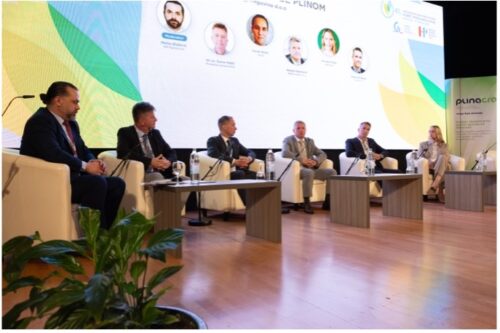 After the presentation in the subject thematic unit, a panel discussion was held, moderated by Marko Blažević, with participation: Davor Matić, MSc. from the Ministry of Economy of the Republic of Croatia, Goran Babić from the Croatian Energy Regulatory Ageny, Nenad Hranilović from the company Međimurje-plin Ltd., Marijeta Majer from ENNA Next and Marko Križanec from Energo Ltd. The panelists announced an amendment to the Gas Market Act, whose primary objective is the incorporation of provisions from the new European Directive on common rules for the internal market in renewable gases, natural gas, and hydrogen. In this context, gas infrastructure must be adapted to accommodate decarbonized gases, which will result in stronger consumer protection and an enhanced role for regulatory authorities. Gas prices are fixed until the end of September; however, future developments remain uncertain, as prices have increased due to the conflict in the Middle East and are currently fluctuating in the range of 40–60% on international markets. The Republic of Croatia currently has the third lowest gas price in the EU, and regulatory decisions must ensure a price level that is acceptable both for households and for suppliers. During the discussion, attention was drawn to the introduction of a stricter CO₂ emissions trading system (ETS2), the implementation of which has been postponed from 1 January 2027 to the beginning of 2028. The increased burden arising from mandatory emissions allowance purchases is expected to lead to higher gas prices for households. The estimated additional cost associated with the ETS2 system is projected at 5–10 EUR/MWh, which suppliers will inevitably have to pass on to the end consumers. In the current complex geopolitical environment, the Ministry of Economy of the Republic of Croatia has advocated within EU discussions for reducing the negative cost impact of the ETS2 system on both the economy and households, as it would represent an additional price shock in a period of already elevated international market prices. Suppliers argue that, during a crisis period, it is not the appropriate time to introduce additional levies that further increase gas prices, particularly given that gas procurement contracts for 2027 and 2028 must already be secured with clear visibility on future cost structures.
After the panel discussion, Goran Erceg, from Bureau Veritas Croatia Ltd., presented the repurposing of existing gas pipelines for hydrogen transport (Hydrogen ready pipeline). Omar Bouledroua, PhD., from SONATRACH, provided an overview of two Algerian projects related to the assessment and qualification of existing natural gas pipelines for future hydrogen service. The results of testing low-pressure regulators after long-term operation in the network were explained by Berislav Pavlović, PhD., from Gradska plinara Zagreb Ltd. The characteristics of the regulators were examined, including recorded outlet pressures for defined inlet pressures and specified flow ranges. The tests were carried out on five types of pressure regulators manufactured between 1985 and 2015. The external pipeline coating plays an important role in protecting against corrosion caused by the surrounding environment, including natural soil, waste materials, and seawater. Martin Durcik, from MONTI-Werkzeuge GmbH, presented examples of coating degradation, which can take many forms, along with field surface preparation solutions designed to prevent such deterioration.
Following the conclusion of the presentations, a panel discussion was held, moderated by Srećko Ezgeta, with participation: Ivana Lukač from the Croatian Energy Regulatory Agency, Robert Bošnjak from Plinacro Ltd., Dalibor Bukvić from Brod-Plin Ltd., Darko Markovinović from Podzemno skladište plina Ltd. and Nikola Novaković from E.ON Distribucija plina Ltd. At the beginning of the panel discussion, the panelists announced a new Gas Market Act, which will include provisions on biomethane and hydrogen. In order to enable hydrogen acceptance, the transmission system must be properly prepared, including a redesign of its operational concept due to a higher and more diverse number of entry points. Initially, a hydrogen blend of 5% with natural gas is expected to be introduced, which can comply with existing standard specifications. Regarding the possibility of hydrogen storage in the Okoli underground storage facility, a reservoir analysis is required. For the future gas storage facility in Grubišno Polje, optimistic results were obtained in one section of the reservoir during core sampling of the formation. The outlook for biomethane markets is positive, with future deployment expected to focus on production for heating and transport needs of local communities, such as the one in Slavonski Brod. The panelists highlighted high expectations from gas distributors regarding changes in tariff methodology, as a new five-year regulatory period begins at the start of next year. They also emphasized the issue faced by distributors regarding concession tenders and renewals, as the process is too lengthy. Concessions are no longer granted by local municipalities but by counties, which requires a precise legislative framework, since the existing Gas Market Act and the Concessions Act overlap in certain areas.
The experiences gained from the application and implementation of Regulation (EU) 2024/1787 on methane emissions reduction within the gas transmission system of the Republic of Croatia, operated by Plinacro Ltd., were presented by Luka Ivanec. Vibroacoustic technology has been used for more than a decade to detect leaks and operational anomalies in pipelines by monitoring vibroacoustic waves propagating along the pipeline. Fabio Chappa, PhD., from Enivibes S.r.l, described two case studies demonstrating the adaptability of VT in different pipeline systems. Methane emissions from gas transmission and distribution networks represent a critical environmental and operational challenge, particularly in the context of increasingly stringent European regulations. Tommaso Russo, from Automa Srl, explained an integrated solution addressing the entire methane emissions management lifecycle: detection, quantification, and mitigation. Within the energy sector, maintenance and reconstruction activities on gas infrastructure are particularly critical, as they involve the release of natural gas into the atmosphere. The Natural Gas Recovery Compressor Unit (NGRCU) was presented by Damir Jeličić, from Pico Flow Controls Ltd. The NGRCU enables safe, environmentally acceptable, and efficient procedures during maintenance, reconstruction, and emergency interventions on gas infrastructure. The oil and gas industry, particularly in the exploration and production segment, continues to face challenges in hydrocarbon resource management, especially in mature fields where efficient data utilization is essential. Alan Vranjkvić, PhD., from INA-Industrija nafte, d.d., explained an advanced AI-driven workflow that automates the digitization and structuring of geological information from core samples and well-testing reports. By applying OCR, Generative AI, and NLP technologies, the solution enables rapid extraction, classification, and standardization of key data while maintaining high-quality standards. Richard Clarke, from the company Xplorobot, described the Xplorobot Laser OGI, an integrated handheld platform for methane detection and compliance management based on Tunable Diode Laser Absorption Spectroscopy (TDLAS). The system combines a high-precision TDLAS sensor with real-time visualization, integrated meteorological sensors, and a cloud-connected digital compliance database. Filip Caušević, from MISTRAS Adriatic Ltd., presented the company’s integrated high-technology solutions for the protection of industrial and civil assets, ensuring the integrity of industrial systems. Through its services and products, MISTRAS helps clients reduce risks, extend asset lifespan, and optimize operational and business performance. Tomislav Medvarić, from E.ON Distribucija plina Ltd., provided the implementation of integrated GIS (Geographic Information System) and Workforce Management (WFM) systems within the company, aimed at significantly improving operational processes, data quality, and overall business efficiency. Particular emphasis was placed on the digitalization of former distributors’ networks and their integration into a unified system, ensuring a comprehensive, up-to-date, and reliable representation of infrastructure assets. The challenges of cybersecurity in gas distribution systems, in the context of the requirements of the NIS2 Directive and the Croatian Cybersecurity Act, were desribed by Sandra Vdovjak, from ATO Inženjering Ltd. She introduced an organizational maturity model structured across three levels (“juniors”, “seniors”, and “veterans”), reflecting typical industry conditions and supporting the development planning of cybersecurity programmes.
 Igor Marjanović, from Center for Vehicles of Croatia d. d., explained the condition of the vehicle fleet and the age structure of vehicles in 2025. He presented the regulatory framework related to the testing and approval of gas-powered vehicles, as well as an analysis of the share of registered passenger vehicles (M1 category) powered by gas during the previous year in relation to the total vehicle fleet in the Republic of Croatia. The strategic project aimed at modernizing public urban transport, increasing the number of routes and passengers, and establishing sustainable green urban mobility with lower CO₂ emissions was outlined by Moris Gergorić from the company Plinara Ltd. Pula. He reviewed the history of the construction of the CNG and LPG filling station in Pula, from the initial EU project to the implementation of solar photovoltaic collectors supporting a new model of green energy supply for vehicles. Krešimir Marijanović, from the company Brod-plin Ltd., emphasized that renewable compressed natural gas (bio-CNG) is an important factor in transport decarbonization and an equal partner to electromobility. He described an analysis of an ambitious pilot biogas project based on wastewater treatment in Slavonski Brod, as a foundation for the application of bio-CNG and as a new perspective for transport applications that could serve as an example for other Croatian cities. Marko Horvacki Zivalov, from the company Koncepting Ltd., discussed the potential of small-scale CNG filling stations. He presented a cost-effectiveness analysis comparing the use of CNG-powered vehicles with equivalent petrol-powered vehicles. In his view, the gas sector in the Republic of Croatia still has considerable potential for increasing the use of CNG-powered vehicles through simplified procedures for the accelerated installation of mini filling stations.
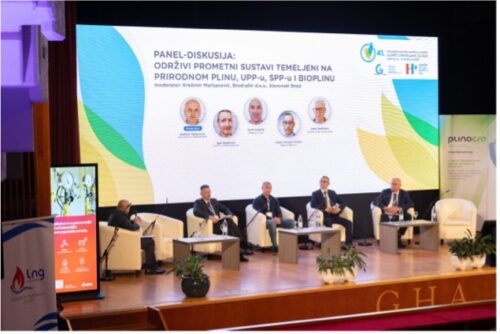 After the speakers’ presentations, a panel discussion was held, moderated by Krešimir Marijanović and participants included: Igor Marjanović, from Center for Vehicles of Croatia d. d., Moris Gergorić from the company Plinara Ltd. Pula, Marko Horvacki Zivalov from the company Koncepting Ltd. and Zoran Dojčinović from the Croatian Gas Association. At the opening of the panel discussion, participants addressed trends in the registration of natural gas and LPG (autogas) vehicles over the period 2014–2025. The modernization of public urban transport and the development of sustainable, low-carbon urban mobility are integral components of the green energy transition, in which refuelling stations its availability, density, and service offering will play a key role in the development of biomethane and hydrogen consumption. CNG consumption in the Republic of Croatia is predominantly associated with public urban transport, while its use in passenger vehicles remains limited. In this context, panelists welcomed the development of new technologies for biogas production from wastewater, i.e. biomethane, as a potentially broad domestic production base. Compared to the traditional market, LPG (autogas) consumption remains relatively stable, although a slight decline in the number of registered vehicles has been observed in the Republic of Croatia.
After the panel discussion, Petra Šantić LL.M., from the Law Office of Petra Šantić, discussed about the implications of the proposed amendments to the Public Procurement Act on public procurement procedures in the gas sector. She reviewed the existing legal framework of the public procurement system in the Republic of Croatia. The reasons for amending the Public Procurement Act include further alignment with EU Public Procurement Directives, continued digitalisation and modernisation of the public procurement system, strengthening the quality of procurement preparation, improving anti-corruption effects, increasing transparency and fostering competition, as well as enhancing the legal framework and eliminating identified ambiguities in the application of the Act. An overview of gas distribution in the energy transition, in relation to investment sustainability, the regulatory framework, and affordability, was presented by Janja Kulić, MSc., from Kulić & Sperk Ltd. She covered tariff increases and the new gas distribution methodology. She also discussed a macroeconomic analysis for the 2022–2024 period, as well as expectations for 2026. She emphasized the pronounced fragmentation of the Croatian market compared to the EU Member States and stated that the energy transition is significantly reshaping both the investment and market context. Stjepan Pavliša, from the company Pavliša objekti Ltd., warned about poor practice examples in the application of the Ordinance on minimum safety and health requirements for workers and on technical supervision of plants, equipment, installations, and devices in areas with explosive atmospheres. He emphasized the importance of clearly defined inspection responsibilities in enforcing the Ordinance within occupational safety, fire protection, mining, and electricity sectors, in accordance with specific regulations.
In the poster section dedicated to gas industry and energy topics, the authors presented their posters and delivered lectures on a range of topics, including smart integration of gas, heat, and water towards integrated energy management, the importance of energy management systems in oil and gas exploration and production, geopolitics as a driver of change in the transformation of gas supply routes in the European Union, analytical insights into the importance of the Trans-Saharan Gas Pipeline, and modelling sulfur solubility in acid gas mixtures using artificial neural networks.
Numerous exhibitors from Croatia and abroad showcased advanced technical solutions relevant to the gas industry and energy sector at the gas equipment and technology exhibition held alongside the conference. The 41st International Scientific & Expert Meeting of Gas Professionals enabled extensive business networking among a large number of gas and energy professionals, resulting in new business deals and partnerships, along with pleasant informal gatherings in Opatija.
At the end of the three-day meeting, the President of the Croatian Gas Association, Assoc. Prof. Dalibor Pudić, PhD., thanked to the high auspices, the main partners, gold sponsor, sponsors, co-organisers, media partners, lecturers, panelists, companies that rented exhibition units, media representatives, and all other participants for their support and contribution to the success of the meeting. Over the three days, participants had the opportunity to hear numerous presentations addressing current challenges and, through open discussion, to seek solutions. Several key messages emerged from the conference: energy security is essential for a stable economy, and natural gas has played and will continue to play a key role in ensuring flexible energy supply. Furthermore, natural gas will remain an important part of the energy mix, not only in the transition but also in the long-term stability of the system..
The 42nd INTERNATIONAL SCIENTIFIC & EXPERT MEETING OF GAS PROFESSIONALS will be held from 5 to 7 May 2027 in Opatija.


